Seeking Implementation Partners | Grant-Funded Development

Advancing STEM Education Through Sustainable Agriculture Technology

An innovative educational platform addressing critical gaps in STEM engagement and environmental literacy through hands-on fogponics systems.

Become a Partner Research Framework

Educational & Environmental Convergence

Our students face interconnected challenges that demand innovative, integrated solutions

πŸŽ“

The Workforce Gap

Current STEM education lacks the engaging, hands-on experiences needed to prepare students for emerging careers in agricultural technology.

A significant workforce shortage exists in agricultural technology, with industry and government agencies identifying STEM pipeline development as a critical need

πŸ’§

The Climate Crisis

Global agriculture is at a breaking point, demanding new solutions for resource management and sustainable food production.

70%

of the world's freshwater resources are consumed by traditional agriculture

An Integrated STEM Learning Ecosystem

FogponicsEDU represents a novel approach to experiential STEM education, integrating sustainable agriculture technology, hands-on system building, environmental engineering, and project-based learning into one cohesive educational platform.

🌱

Sustainable Agriculture Technology

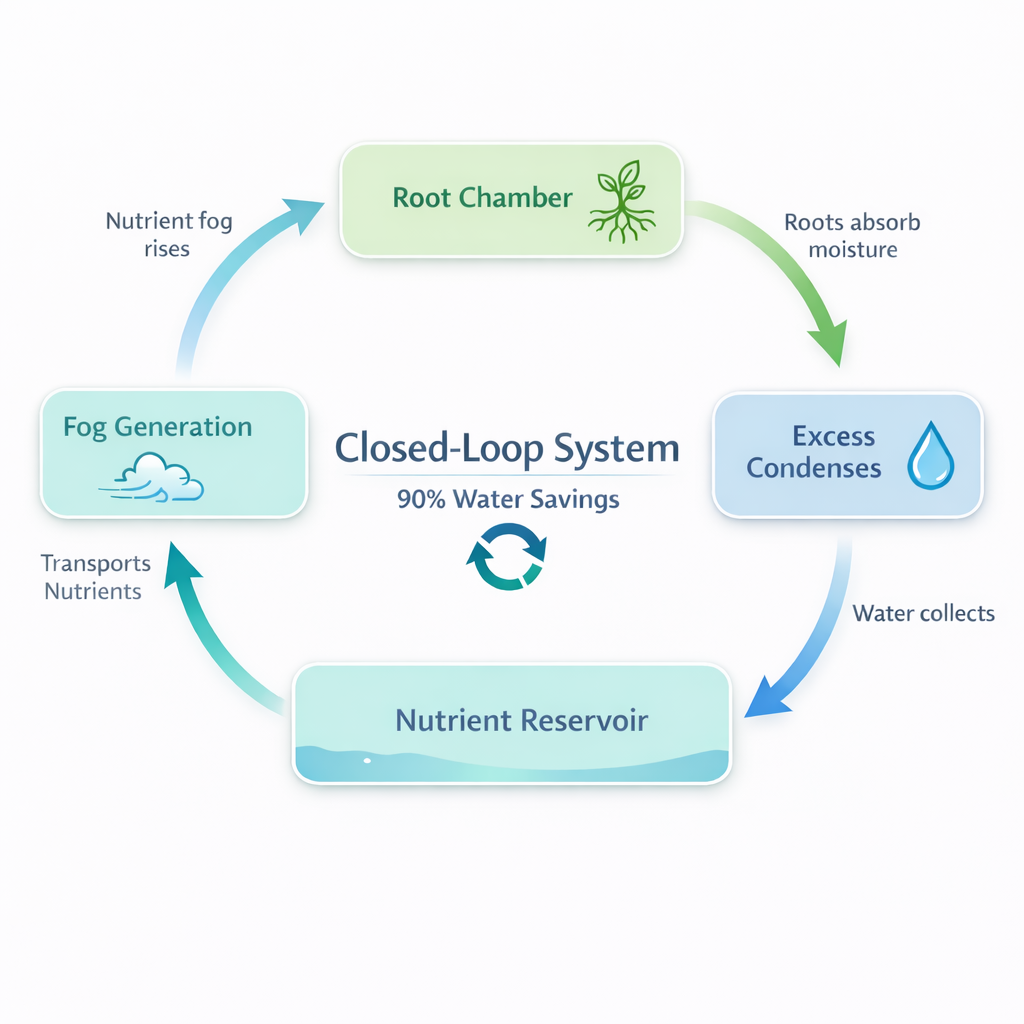
Closed-loop fogponics system designed to achieve up to 90% water savings

πŸ”¬

Hands-On STEM Learning

Students build, monitor, and optimize a working fogponics system

πŸ’§

Environmental Engineering

Direct demonstration of circular resource management and water conservation

Real-World Learning in Action

Students don't just learn about sustainable agricultureβ€”they engineer it, program it, and optimize it through direct hands-on experience.

Our integrated approach bridges multiple STEM disciplines naturally, demonstrating how biology, physics, computer science, and engineering work together to solve real global challenges.
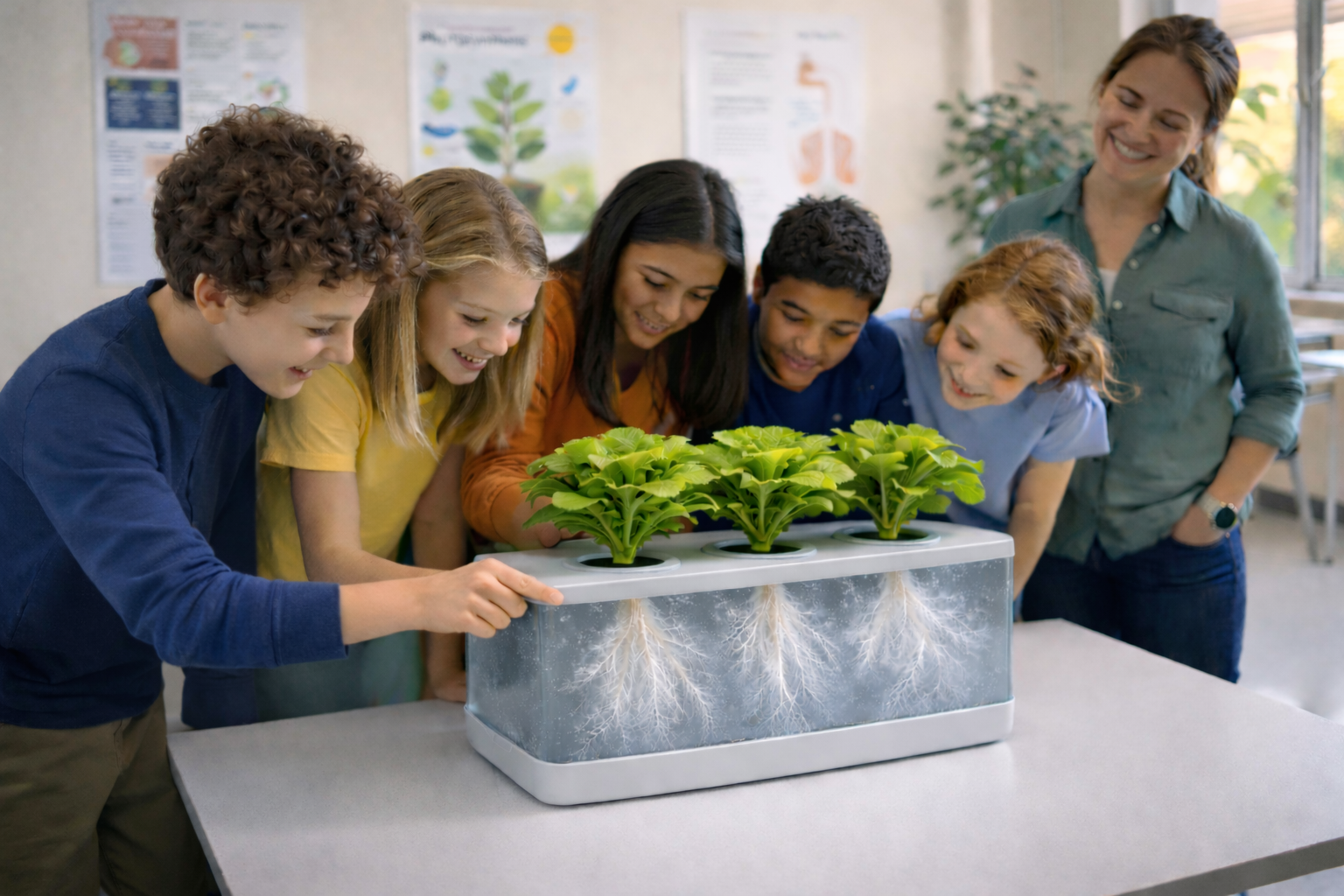
Students collaborating on fogponics system in educational setting

Research Framework & Methodology

Grounded in established principles of project-based learning and integrated STEM education

Guiding Research Questions

  • To what extent does integrated fogponics education improve student understanding of complex environmental systems?
  • How does hands-on agricultural technology experience affect student interest in ag-tech careers?
  • What implementation models are most effective across different educational contexts?

Assessment Framework

  • Pre/post knowledge assessments (content mastery)
  • Career interest surveys (longitudinal tracking)
  • Student attitude surveys (engagement, self-efficacy)
  • Educator feedback protocols (implementation fidelity)

Anticipated Outcomes

We expect hands-on, integrated STEM learning may lead to:

  • Improved understanding of STEM concepts
  • Increased interest in ag-tech careers
  • Strong student engagement
  • Development of systems thinking skills

Pedagogical Foundation

Grounded in established educational frameworks:

  • Project-Based Learning (PBL)
  • Integrated STEM Education
  • Constructivist Pedagogy
  • Place-Based Education

Demonstrating Circular Resource Management

A living laboratory for sustainable water conservation achieving up to 90% water savings

Conceptual closed-loop water cycle diagram showing fog generation, root absorption, condensation, and recirculation

Societal Benefits

Addressing workforce development, environmental stewardship, and educational equity

πŸ‘¨β€πŸ’Ό

Workforce Development

Prepares students for emerging careers in agricultural technology

🌍

Environmental Stewardship

Develops environmental literacy and demonstrates climate solutions

πŸ“š

Educational Equity

Turnkey curriculum enables implementation in under-resourced schools

🀝

Community Engagement

Connects students with local food systems and sustainable practices

Join Us in Building the Next Generation of Innovators

Our mission is to inspire the next generation of agricultural innovators, environmental engineers, and sustainability leaders through hands-on STEM education that demonstrates real-world solutions to global challenges.

2026 Q2
Pilot Program Launch
2026 Q3-Q4
Data Collection & Analysis
2027
Scale & Dissemination